LASER stands for Light Amplification by Stimulated Emission of Radiation. It is a high energy beam of light which can be used to treat various retinal disorders. It is a non-invasive OPD (Out-patient Department) procedure.
How is retinal laser performed?
- The eyes will need to be dilated prior to the treatment.
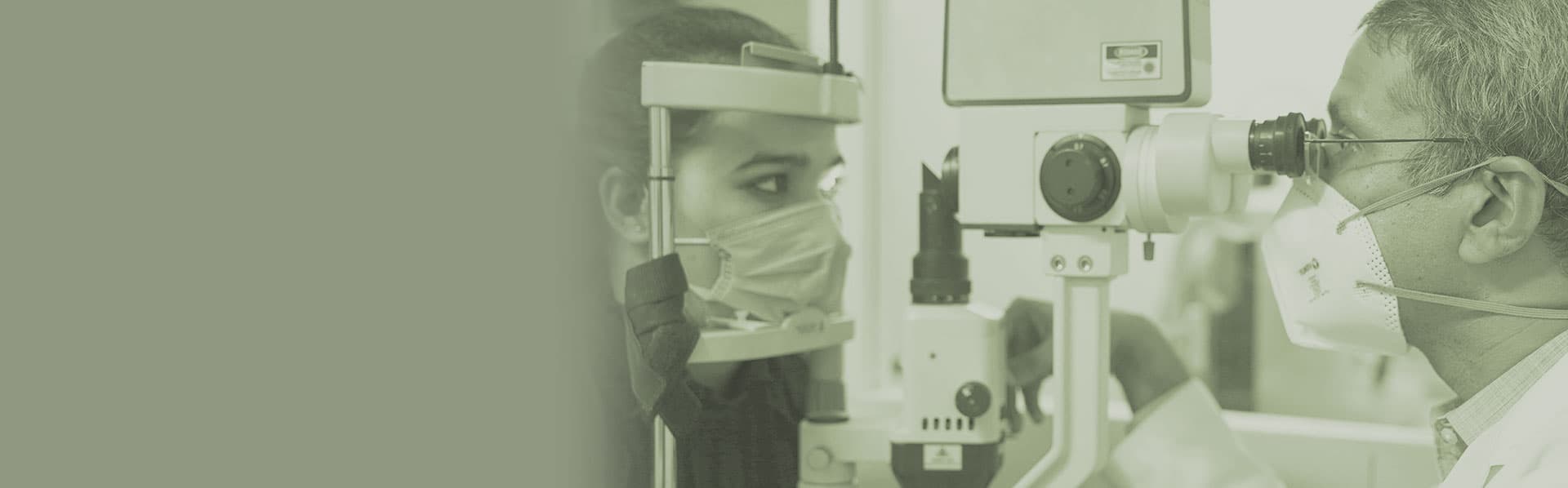
- Laser can be delivered by Slit-lamp or indirect ophthalmoscopy.
- Anaesthetic drops are applied before commencing slit lamp delivery of LASER.
- You have to sit in front of the slit lamp with your chin on a chin rest (an attachment) and your forehead against the bar.
- Doctor will apply a contact lens to your eye to visualise the retina, focus the laser beam on your retina. The procedure takes about 5-10 min .
Why are retinal lasers done?
Retinal Lasers are performed to treat various disorders of Retina like:
- Proliferative Diabetic Retinopathy
- Diabetic Macular Edema
- Neovascularization due to retinal vein occlusions
- Retinal Vasculitis
- Central Serous Chorio-retinopathy
- Peripheral Retinal Degenerations/ holes/ tears
- Retinopathy of Prematurity
- Retinal artery Macroaneurysm
What are the types of retinal lasers?
Pan- Retinal Photocoagulation (PRP)
- Laser done to areas of no/ low blood flow (ischemic areas)
- Away from centre of retina
- PRP is done for disorders like - diabetic retinopathy, vein occlusions, vasculitis, retinopathy of prematurity
Focal laser
- Laser done to areas of leakage.
- Focal Laser is done for conditions like - Diabetic macular edema, Central serous chorio-retinopathy, Retinal artery macroaneurysm
Delimiting Laser
- Laser done to seal breaks in the retina to prevent Retinal detachment
- Delimiting laser is done for peripheral retinal degenerations, tears/ holes in retinal periphery
Disclaimer: Information published here is for educational purposes only and is not intended to replace medical advice. If you suspect that you have a health problem, please consult your doctor immediately.